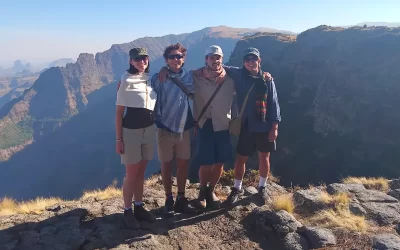
The Simien Mountains are one of those rare destinations where the landscape alone would justify the journey—but scenery is only part of the experience.
1. Some of Africa’s Most Dramatic Mountain Scenery
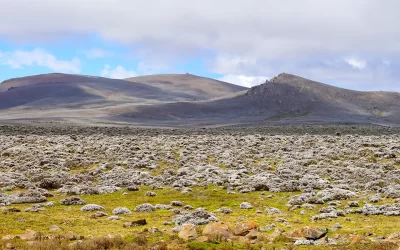
The Simien highlands have been sculpted over millions of years into immense cliffs, peaks, deep valleys and escarpments. UNESCO describes cliff systems reaching around 1,500 metres in relief. Unlike mountain destinations dominated by one summit, the attraction here is the scale of the entire landscape.
2. Trekking for Different Experience Levels
You do not have to summit Ras Dejen to enjoy the Simiens. Options range from:
- day trips;
- short walks;
- two- or three-day treks;
- classic multi-day camping routes;
- extended Ras Dejen expeditions.
That flexibility makes the region suitable for a wide range of travelers.
3. Wildlife You Cannot Easily See Elsewhere
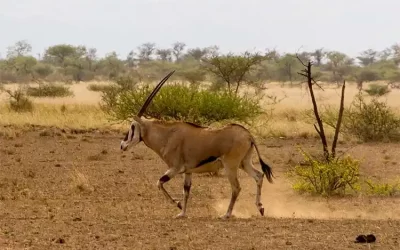
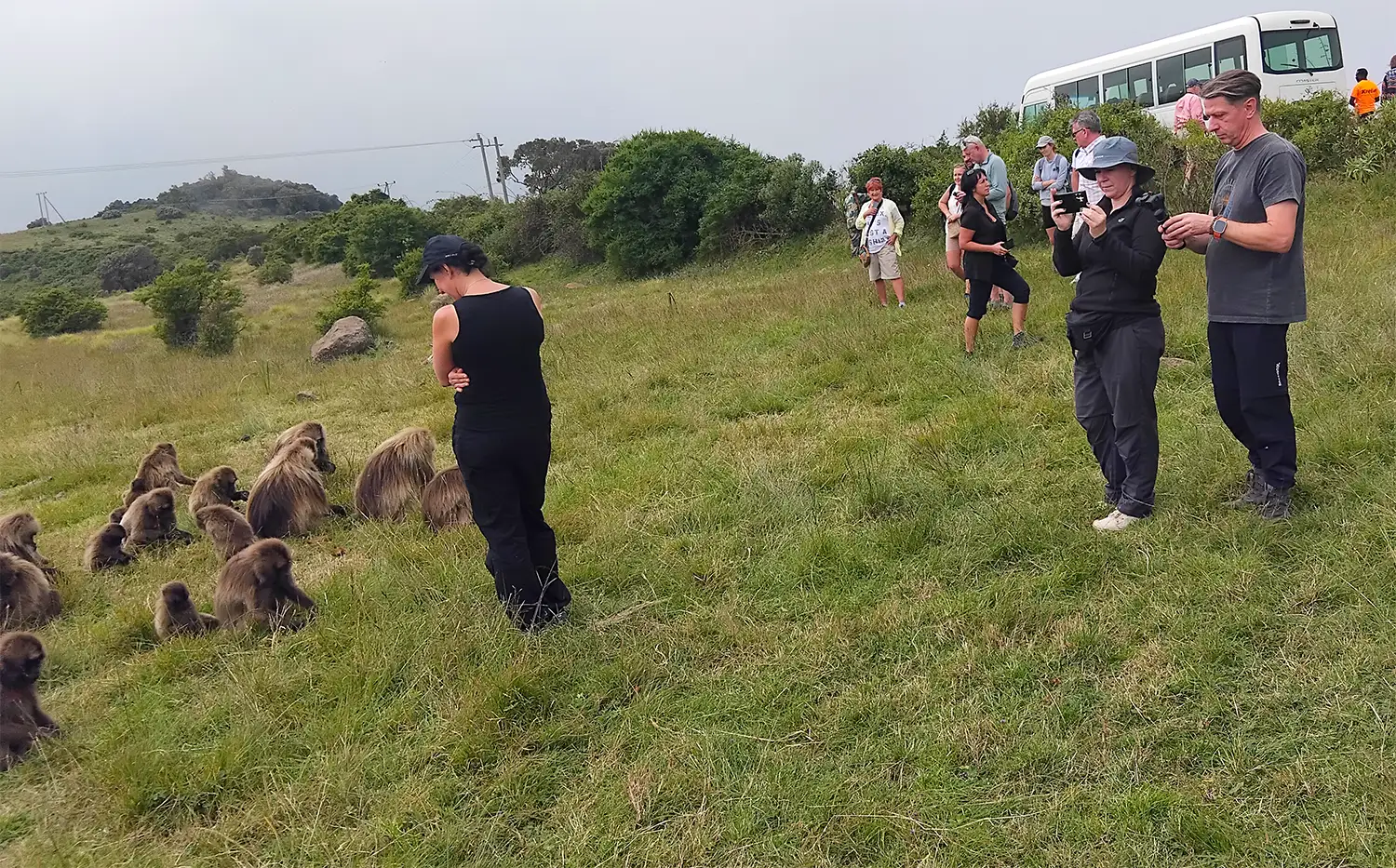
The park protects globally important populations of endemic or highly localized wildlife. Visitors may encounter geladas on open highland grasslands, while Walia ibex inhabit the mountain cliffs. Ethiopian wolves are rarer but represent another important component of the ecosystem.
4. Ras Dejen
At around 4,543 metres, Ras Dejen is Ethiopia’s highest point. For many experienced hikers, reaching the summit is a rewarding goal at the end of a longer Simien expedition.
5. Genuine Multi-Day Trekking
The Simien Mountains reward travelers willing to slow down. Walking from one trekking area to another allows the landscape to change gradually while creating opportunities to experience:
- remote viewpoints;
- changing vegetation;
- wildlife;
- camps;
- villages;
- sunrise and sunset in the mountains.
6. Easy to Combine with Northern Ethiopia
The park combines naturally with:
- Gondar;
- Bahir Dar;
- Lalibela;
- Aksum;
- Tigray.
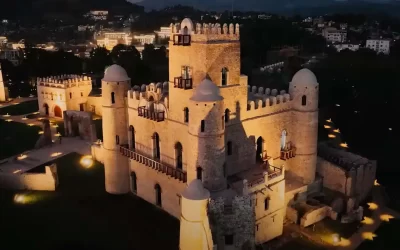
This makes Simien trekking one of the easiest adventure experiences to integrate into a broader Ethiopia trip.
7. Local Expertise Matters
Debark is the gateway to the national park. Ethiopia Trek and Tour is locally based in Debark, giving us direct knowledge of the region, local guides, trekking logistics and the routes used in our itineraries.
FAQ
Are the Simien Mountains worth visiting if I don’t trek? Yes. Short walks and scenic drives can still provide exceptional viewpoints and wildlife opportunities. How many days are ideal? Three to six days provides a strong trekking experience, while longer routes are appropriate for Ras Dejen. What makes Simien different from Bale? Simien is dominated by dramatic cliffs and canyon-like scenery. Bale has broader Afro-alpine plateau, forests and particularly strong wildlife diversity.