
Danakil Depression Tours & Afar Adventure
Discover one of the most extraordinary landscapes on Earth with our Danakil Depression tours in Ethiopia. Located in the Afar region of northeastern Ethiopia, the Danakil is renowned for its otherworldly volcanic scenery, colorful geothermal formations, vast salt flats and extreme desert environment. Our guided adventures offer the opportunity to explore this remarkable region, encounter Afar culture and experience some of Ethiopia’s most distinctive natural wonders.
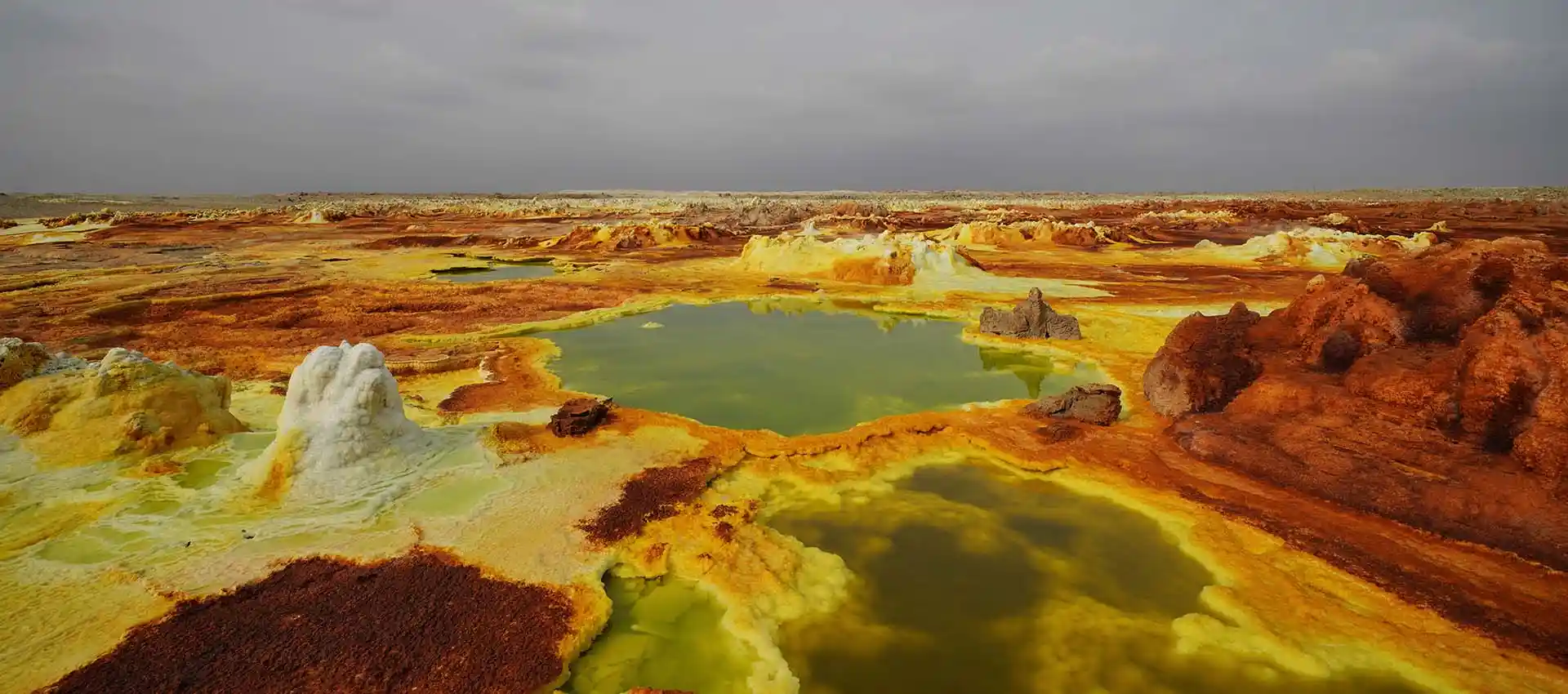
Explore Dallol, Erta Ale Volcano and the Afar Region
A highlight of many Danakil Depression itineraries is Dallol, famous for its vivid mineral deposits, sulfur formations, salt terraces and geothermal landscapes. The unusual colors and textures create an almost surreal environment unlike anywhere else in Ethiopia.
Another major attraction is Erta Ale Volcano, known for its active volcanic activity and dramatic caldera. Depending on current volcanic conditions, access and safety guidance, visitors may be able to trek toward the volcano and experience its remarkable volcanic landscape.
Danakil adventures can also include the immense salt plains of the Afar region, traditional salt-mining areas, the shores of Lake Afrera, and opportunities to learn about the traditions and way of life of Afar communities. Each itinerary offers a different perspective on this fascinating region, combining geological wonders, desert exploration and cultural experiences.
Choose Your Danakil Depression Adventure
Whether you are interested in Dallol’s colorful landscapes, a volcanic expedition to Erta Ale, or a multi-day journey through the Afar desert, our Danakil Depression tours offer different ways to explore this remote destination. Tours can be arranged as part of a dedicated Danakil expedition or combined with other destinations in Ethiopia, depending on your schedule and travel interests.
The region’s extreme temperatures, remote terrain and changing volcanic conditions make careful planning essential. Travel with experienced local guides, suitable vehicles and the necessary permits, and confirm current access and safety conditions before departure.
Browse our Danakil Depression tour packages below to compare itineraries and find an adventure that suits your interests, available time and preferred travel style.

Main Attractions of the Danakil Depression
The Danakil Depression is one of Ethiopia’s most extraordinary travel destinations, offering a combination of active volcanic landscapes, colorful geothermal formations, vast salt plains and distinctive Afar cultural experiences. A guided Danakil Depression tour allows visitors to explore some of the region’s most remarkable natural wonders.
Dallol: Colorful Geothermal Landscapes
Dallol is one of the most visually striking attractions in the Danakil Depression. Its unusual landscape features colorful mineral deposits, sulfur formations, salt terraces and geothermal springs created by intense geological activity. Shades of yellow, orange, green and white give the area an otherworldly appearance, making it a highlight for photographers, geology enthusiasts and adventurous travelers.
Exploring Dallol offers a rare opportunity to see the powerful geological processes that shape the Afar region. Visitors should remain with their guide and follow safety instructions because geothermal ground, hot fluids and mineral crusts can be hazardous.
Erta Ale Volcano: An Active Volcanic Adventure
Erta Ale is one of Ethiopia’s best-known active volcanoes and a major highlight of Danakil Depression tours. Located in a remote desert landscape, the volcano is famous for its dramatic caldera and historically active lava lake.
The journey typically involves traveling by 4×4 to a designated base area before hiking toward the crater, often in the late afternoon or evening to avoid the strongest daytime heat. Depending on volcanic activity, access restrictions and safety conditions, visitors may be able to observe the crater after dark and spend the night near the summit.
A visit to Erta Ale is an unforgettable adventure, but it requires physical preparation, appropriate footwear and careful adherence to local guide instructions. The presence and visibility of lava cannot be guaranteed, as volcanic conditions change over time.
Lake Afrera: A Remote Salt Lake in the Afar Region
Lake Afrera, also known as Lake Afdera, is a saline lake surrounded by the stark landscapes of the Danakil region. It is known for its mineral-rich waters, salt production and remote desert setting.
The lake offers a different perspective on the region, combining striking scenery with an important local livelihood. Depending on the itinerary, visitors may stop to enjoy the views, learn about salt production or experience the water under suitable local conditions.
Because the lake is highly saline, visitors should avoid getting the water in their eyes or swallowing it. Follow local advice about safe access, swimming and rinsing facilities.
The Afar Salt Flats and Traditional Salt Mining
The vast salt flats of the Danakil Depression reveal the region’s long relationship with salt production and trade. Across the pale desert landscape, salt is extracted and prepared for transport, continuing a livelihood that has shaped local communities for generations.
Depending on the route and current conditions, visitors may see salt-mining areas around Lake Asale, also known as Lake Karum, and learn how salt is cut from the ground and transported across the desert. In some areas, camel caravans remain an important part of this traditional trade.
These landscapes provide remarkable photographic opportunities while offering insight into the history, geography and economic life of the Afar region.
Afar Culture and Desert Communities
A Danakil Depression adventure is also an opportunity to learn about the Afar people, whose culture and livelihoods are closely connected to the region’s demanding environment. Traditional salt production, livestock herding, local settlements and desert travel all form part of the area’s distinctive cultural landscape.
Visits to communities and working areas should be conducted respectfully and with local guidance. Always ask permission before photographing people, homes or cultural activities, and follow your guide’s advice on appropriate behavior.
From volcanic terrain and salt plains to local traditions, the Danakil Depression offers a travel experience that goes far beyond conventional sightseeing.
Practical Travel Information for the Danakil Depression
Planning a trip to the Danakil Depression requires preparation. The region is remote, extremely hot and challenging to explore independently. Choosing the right season, allowing enough time and traveling with an experienced operator will help you prepare for the journey.
Best Time to Visit the Danakil Depression
The most suitable period for many visitors is generally November to February, when temperatures are relatively more manageable than during the hottest months. Conditions can still be extremely hot, so visitors should prepare for intense sun and limited shade.
From approximately March onward, temperatures can rise significantly, while the hotter months and seasonal weather can make some routes more difficult or unsuitable. Rain, road conditions, volcanic activity and local security arrangements may also affect access.
For the best experience, plan your Danakil Depression tour during the cooler season and confirm the latest conditions with your tour operator before booking.
How Many Days Do You Need?
The ideal duration depends on which attractions you want to visit and where your tour begins.
- 2 days: A short expedition that may cover selected highlights, but can involve a demanding schedule and considerable driving.
- 3 days: A popular option for visiting key attractions such as Erta Ale, Dallol and the salt flats, depending on the route.
- 4 days or longer: Allows a more relaxed itinerary, additional time for Lake Afrera or other stops, and greater flexibility for a multi-region journey.
The exact itinerary varies according to the departure point, road conditions, security arrangements and site access. Check which attractions are included before choosing a package.
Temperatures and Climate
The Danakil Depression is known for its extreme heat, and daytime temperatures can exceed 40°C (104°F), sometimes reaching 45°C (113°F) or higher. Conditions vary by season and location, and exposed salt flats and volcanic areas offer little shade.
Even during the cooler travel season, heat exhaustion and dehydration are serious risks. Outdoor visits are often planned for early morning or late afternoon, while the hike toward Erta Ale is commonly scheduled for cooler hours.
Drink water regularly, follow your guide’s instructions and tell your guide immediately if you feel dizzy, weak, nauseated or unusually exhausted.
What to Pack for a Danakil Depression Tour
Pack light, but make sure you have the essentials for a hot, remote environment.
- Lightweight, breathable clothing that covers your skin from the sun.
- A wide-brimmed hat, sunglasses and high-SPF sunscreen.
- Sturdy walking or hiking shoes with good grip.
- A headlamp or flashlight with spare batteries.
- A refillable water bottle and any additional water supplies specified by your operator.
- Electrolyte replacement products suitable for your needs.
- A small daypack, personal toiletries and a quick-drying towel if your itinerary includes Lake Afrera.
- Personal medication, basic first-aid supplies and any necessary prescription medicines.
- A power bank, camera and protective bags for dust.
- Some cash for personal expenses, tips or purchases where applicable.
Ask your tour operator which camping equipment, meals, drinking water and other supplies are provided so you do not needlessly duplicate items.
Safety Considerations
The Danakil Depression is a demanding expedition destination, not a conventional self-guided sightseeing area. Extreme heat, remote roads, limited medical facilities, volcanic hazards and changing regional security conditions require careful planning.
Travel with a reputable operator that uses suitable 4×4 vehicles, experienced local guides and the necessary permits and security arrangements. Confirm current access conditions before departure and follow official travel advice relevant to your nationality.
Never approach volcanic craters or geothermal pools without explicit guidance. Stay on approved routes, avoid touching mineral-rich pools or unstable ground, and do not enter restricted areas. Carry sufficient drinking water and follow your guide’s instructions about walking times, rest breaks and emergency procedures.
Travel insurance should explicitly cover the activities and locations on your itinerary, including trekking and emergency evacuation where available. If current security advice or local authorities indicate that a route is unsafe, postpone or change the trip.
Frequently Asked Questions About Danakil Depression Tours
Is the Danakil Depression worth visiting?
Yes. The Danakil Depression offers a rare combination of colorful geothermal formations at Dallol, volcanic scenery at Erta Ale, vast salt flats, remote desert landscapes and opportunities to learn about Afar culture. It is particularly appealing to adventurous travelers interested in geology, photography, nature and destinations beyond Ethiopia’s more familiar historic sites.
How long does a Danakil Depression tour take?
Most visitors should consider a three-day tour to explore several major highlights. Two-day itineraries may be available for travelers with limited time, while four-day trips allow more flexibility and additional stops. The best option depends on your starting point, selected attractions and current access conditions.
Can I visit Dallol and Erta Ale on the same tour?
Yes. Many multi-day Danakil Depression tours are designed to include both Dallol and Erta Ale, often alongside the salt flats and other attractions. Confirm the exact itinerary before booking, as road conditions, security restrictions and volcanic activity can affect which locations are accessible.
Can I visit the Danakil Depression independently?
Independent travel is not recommended. The region’s extreme environment, remote tracks and changing security conditions make an organized expedition with an experienced operator the more appropriate choice. Your operator should explain the required permits, local guides, vehicles and security arrangements before departure.
Is the Erta Ale lava lake always visible?
No. Erta Ale is an active volcano, and its activity and crater conditions can change. Although the volcano is famous for its lava lake, visible lava cannot be guaranteed during every visit. Access may also be restricted when conditions are considered unsafe.
What type of accommodation is available in the Danakil Depression?
Accommodation is generally basic compared with Ethiopia’s main cities and established tourist destinations. Depending on the itinerary, visitors may stay in simple camps or designated sleeping areas near expedition stops, including the Erta Ale area. Facilities can be limited, and some itineraries involve sleeping outdoors.
Ask your tour operator whether bedding, mattresses, meals, toilets, drinking water and other camping essentials are included. Travelers should be prepared for a rugged experience rather than hotel-style comfort.
How hot is the Danakil Depression?
Daytime temperatures can exceed 40°C (104°F) and may reach 45°C (113°F) or higher. Heat exposure is particularly challenging on the open salt flats and around Dallol, where shade is limited. Even during the preferred travel season, visitors should take hydration, sun protection and rest breaks seriously.
Can I visit Lake Afrera during a Danakil tour?
Yes. Lake Afrera is included in some itineraries, particularly longer tours or routes that pass through the southern part of the depression. Visitors may enjoy the scenery and learn about local salt production. Whether swimming or floating is appropriate depends on local conditions, access and safety guidance.
Can I combine a Danakil Depression tour with other destinations in Ethiopia?
Yes. Danakil can be combined with other Ethiopian destinations, depending on your available time, transport connections and current regional conditions. Possible combinations include Addis Ababa, Lalibela, Gondar, other northern historic sites or additional destinations elsewhere in the country.
Some combinations work best with domestic flights or separate tour segments rather than one continuous road journey. Allow enough time for transfers, and confirm the feasibility of routes before booking, especially when travel involves areas affected by changing security conditions.
What should I check before booking a Danakil Depression tour?
Before confirming your trip, check the itinerary, departure and return points, transport arrangements, accommodation, meals, drinking water, permits, security arrangements and any additional costs. Ask whether Dallol, Erta Ale, Lake Afrera and the salt flats are included, and whether the itinerary may change due to weather, volcanic activity or access restrictions.
Choose a tour that prioritizes safety, uses experienced local guides and provides clear information about what is included.
Is the Danakil Depression suitable for children or older travelers?
The region’s extreme heat, basic accommodation, long drives and potentially strenuous hikes may make it unsuitable for some travelers, particularly young children, people sensitive to heat or anyone with mobility limitations. Suitability depends on the individual and the exact itinerary. Discuss your needs with a qualified travel provider before booking.